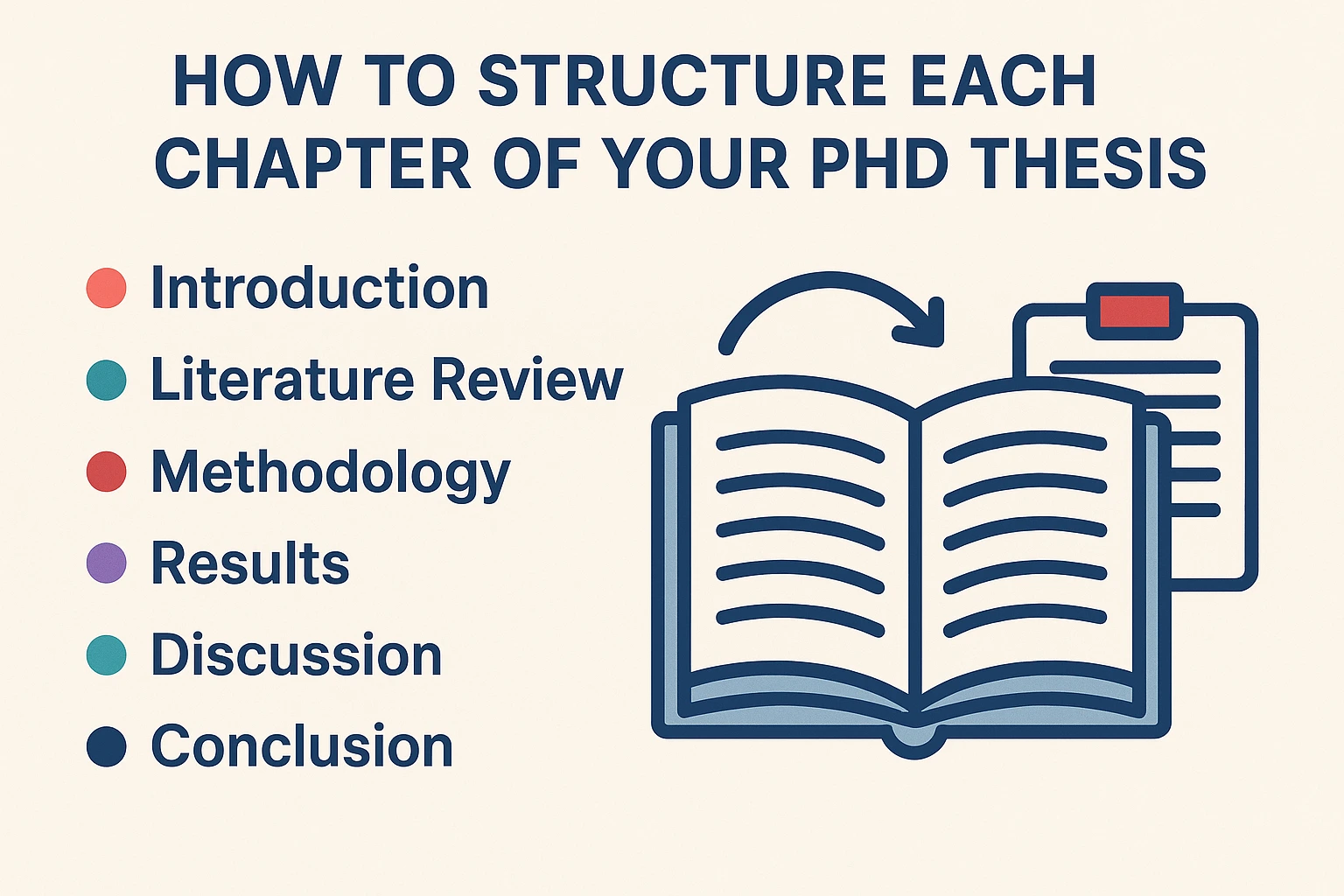
How to Structure Each Chapter of Your PhD Thesis
Writing a PhD thesis is like building a house—you need a strong foundation, a clear design, and carefully arranged sections that support one another. A well-structured thesis not only makes your research easier to follow but also demonstrates your ability to think logically and critically.
In this blog, we’ll break down how to structure each chapter of your PhD thesis so that your work flows smoothly and makes a lasting impact.
1. Introduction: Setting the Stage
The introduction is the entry point to your thesis. It tells readers what your research is about, why it matters, and how it is organized.
What to include:
-
Background and context
-
Research problem and objectives
-
Research questions or hypotheses
-
Significance of your study
-
Overview of the thesis structure
👉 Tip: Think of your introduction as the “map” that guides readers through your research journey.
2. Literature Review: Framing Your Research
The literature review positions your work within existing knowledge. It shows what has been studied, what gaps exist, and how your research fills those gaps.
What to include:
-
Key theories, concepts, and models
-
Critical review of previous studies
-
Gaps in the literature
-
Theoretical or conceptual framework
👉 Tip: Avoid turning this into a summary. Focus on critical analysis and synthesis.
3. Methodology: Explaining Your Approach
Your methodology chapter is where you justify how you conducted your research. Think of it as your research blueprint.
What to include:
-
Research philosophy and approach (qualitative, quantitative, or mixed)
-
Research design and strategy
-
Data collection methods
-
Data analysis techniques
-
Ethical considerations
-
Limitations of your methods
👉 Tip: Be transparent—examiners want to see not just what you did, but why you chose that approach.
4. Results: Presenting Your Findings
The results chapter is all about presenting your data clearly and systematically. Keep interpretation for later.
What to include:
-
Descriptive summaries (tables, charts, graphs)
-
Findings linked to research questions
-
Patterns, trends, and anomalies
👉 Tip: Let visuals do the heavy lifting. A well-labeled figure often says more than a page of text.
5. Discussion: Interpreting the Results
This is where you turn raw findings into meaningful insights. The discussion chapter explains what your results mean in the context of your research questions and the wider literature.
What to include:
-
Key interpretations of findings
-
Comparisons with past studies
-
Theoretical and practical implications
-
Unexpected results and possible explanations
-
Limitations of your research
👉 Tip: This chapter should connect the dots—don’t just restate results, explain their significance.
6. Conclusion: Wrapping It All Up
The conclusion brings your thesis to a close. It should remind readers of your contributions and open doors for future work.
What to include:
-
Recap of research aims and major findings
-
Contributions to knowledge and practice
-
Limitations (briefly revisited)
-
Recommendations for future research
👉 Tip: End strong. Leave your reader with a clear sense of your research’s value.
7. References and Appendices
Finally, include all references in your required citation style (APA, MLA, Chicago, IEEE, etc.). Appendices hold supplementary materials such as questionnaires, transcripts, extended tables, or codes.
Final Thoughts
Each chapter of your thesis plays a specific role, but together they should form a cohesive and compelling narrative. Think of your thesis as a story: the introduction sets the scene, the literature review builds context, the methodology explains your plan, the results provide evidence, the discussion gives meaning, and the conclusion ties everything together.
With a clear structure, your PhD thesis will not only showcase your research but also your ability to think, argue, and contribute to your field like a true scholar.