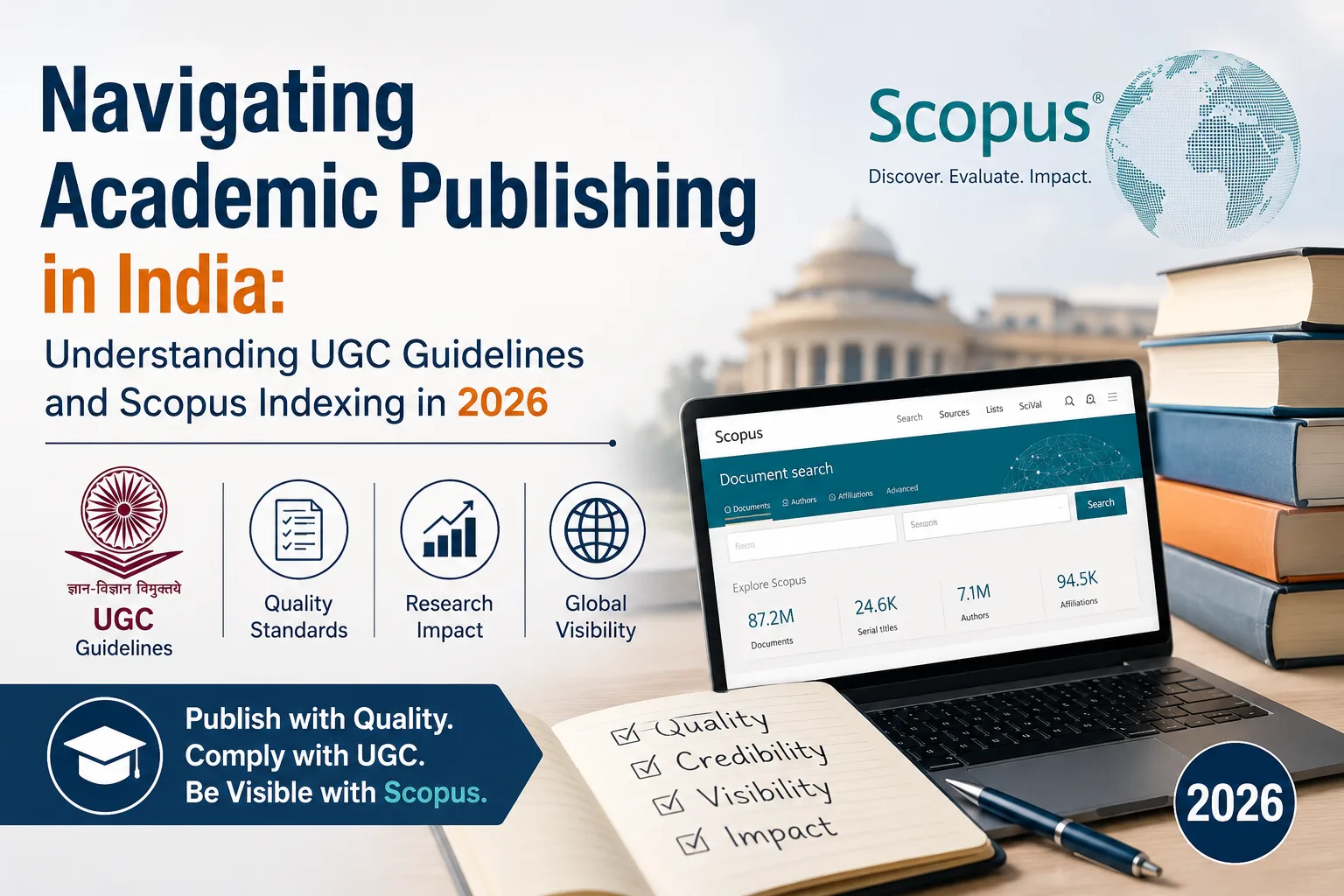
Publishing Research in India: What Every Scholar Actually Needs to Know
If you're a PhD scholar in India, you've probably felt that quiet dread the one that creeps in when your supervisor casually mentions "you need publications before thesis submission." Or maybe you're a faculty member watching a promotion slip away because your journal doesn't qualify. Whatever brought you here, you're not alone, and this guide is written for you.
Let's cut through the confusion and talk about what's actually happening with academic publishing in India right now.
Why Publishing Feels So Complicated (And Why It Doesn't Have to Be)
Indian researchers face a unique challenge: you have to satisfy local institutional requirements and earn credibility on a global stage often simultaneously. Add to that a flood of predatory journals disguised as legitimate ones, and it's easy to feel overwhelmed.
The good news? Once you understand the two key frameworks UGC guidelines and Scopus indexing a lot of this confusion clears up.
What UGC Actually Wants From You Now
The University Grants Commission has gone through some significant changes recently. For years, researchers relied on the UGC-CARE list, introduced in 2018 under its CARE (Consortium for Academic and Research Ethics) framework. It was straightforward: get published in a listed journal, stay compliant.
Then, in October 2024, UGC discontinued the formal CARE list entirely.
This caught a lot of researchers off guard. But here's what it actually means: UGC no longer wants you to check a box on a list. Instead, it's asking you to exercise judgment. The focus has shifted to "suggestive parameters" essentially, can you demonstrate that your journal is genuinely peer-reviewed, transparent, and credible?
What UGC looks for today:
- Peer-reviewed, refereed journals with verifiable editorial processes
- Originality and ethical compliance in your work
- Journals with traceable indexing (Scopus remains a gold standard here)
Most Indian universities still require 2–3 publications before you can submit your PhD thesis, though this varies always confirm with your specific institution.
Quick tip: Don't rely on outdated information from seniors or department notices. Check the official UGC website directly, and verify your university's specific rules with your research coordinator.
Scopus: Why It Matters More Than Ever
If UGC has stepped back from maintaining a list, the natural question is: what do I aim for?
The answer most researchers and institutions are gravitating toward is Scopus.
Managed by Elsevier, Scopus is one of the world's largest research databases covering over 40,000 journals across disciplines. Getting published in a Scopus-indexed journal isn't just a credentialing exercise; it genuinely expands who reads and cites your work.
Here's what Scopus indexing means for you practically:
- Your research becomes discoverable to scholars worldwide
- You gain access to metrics like CiteScore, SJR, and h-index useful for tracking your own academic footprint
- It strengthens your profile for international collaborations, grants, and promotions
- Even after UGC-CARE was discontinued, Scopus journals retain their prestige under the old Group II classification
Think of Scopus not as a bureaucratic hurdle but as a signal it tells the rest of the world that your work went through real scrutiny.
A Practical Roadmap: From Manuscript to Published
Here's how to approach the process without losing your mind.
1. Find the Right Journal First
Don't write your paper and then look for somewhere to send it. Start by identifying 3–5 journals aligned with your research area. Use Scopus Sources (scopus.com/sources) or your university library's journal finder tools. Look at what journals the top researchers in your field publish in.
2. Verify Before You Submit
This step saves you months of wasted effort. Before submitting anywhere:
- Confirm current indexing directly on the Scopus or Web of Science website (not through the journal's own claims)
- Read through the journal's editorial board are these real, recognizable scholars?
- Check the peer review process and timeline
- Look up publication fees and what they cover
Red flags to watch for: journals promising decisions within 48 hours, no clear editorial board, unusually high acceptance rates, or fees that seem to appear out of nowhere after submission.
3. Write With the Reviewer in Mind
Structure matters. For scientific work, the IMRAD format (Introduction, Methods, Results, and Discussion) is standard. For social sciences, follow your target journal's specific guidelines carefully.
Run a plagiarism check before submission not just for ethics, but because most reputed journals screen for this automatically. Tools like Turnitin or iThenticate are widely used.
4. Don't Fear the Revision Stage
Getting a "revise and resubmit" decision is not a rejection. In fact, it's a good sign it means the editor sees potential in your work. Respond to reviewer comments systematically, point by point. Be respectful even when you disagree, and always explain your reasoning clearly.
5. Make Your Published Work Visible
Publishing is only step one. Once your paper is out:
- Upload it to ResearchGate and Academia.edu
- Link it to your ORCID profile
- Share it through your institution's repository
- Mention it in your email signature, LinkedIn, and academic profiles
Your work doesn't promote itself.
The Real Challenges No One Talks About Enough
Let's be honest about what makes this hard.
Predatory journals are everywhere. Despite UGC's efforts and increased awareness, journals that charge fees and publish without real review are still common. They prey on the pressure researchers feel to publish quickly, and the damage to your reputation from publishing in one can outlast the "shortcut" it seemed to offer.
Article Processing Charges (APCs) are expensive. Publishing open-access in reputed international journals can cost anywhere from ₹50,000 to several lakhs. This is a genuine barrier, especially for independent researchers or those without institutional support. Look for journals that offer fee waivers, or explore Diamond Open Access options where neither author nor reader pays.
Indian journals don't always get the global respect they deserve. Some excellent research comes out of India-based journals, but the international visibility gap is real. This doesn't mean avoid them just be strategic about where you target based on your goals.
The publish-or-perish culture is exhausting. The pressure to accumulate publications for career milestones can push researchers toward quantity over quality. Resist this where you can. One strong paper in a credible journal is worth more than three rushed ones in questionable outlets.
What the Best Researchers Do Differently
After speaking with established academics and reviewing what works, a few patterns stand out:
- They target strategically aiming for a mix of compliance-friendly journals and high-impact ones
- They collaborate early working with experienced co-authors helps with both quality and journal navigation
- They stay updated following UGC notices, Scopus updates, and their field's journal rankings regularly
- They mentor and get mentored publishing is a skill, and guidance from someone who's done it recently in your field is invaluable
A Final Word
Academic publishing in India is genuinely getting better more rigorous, more internationally connected, and more honest about what quality means. But the transition is messy, and researchers often pay the price for policy changes they didn't cause.
The best thing you can do is focus on what you can control: the quality of your research, the integrity of your process, and the thoughtfulness of where you choose to share it.
Your work matters. Make sure it lives somewhere that reflects that.
Always verify current UGC policies at ugc.gov.in and Scopus journal status at scopus.com/sources before making submission decisions.