If you are writing a master's thesis or doctoral dissertation right now, you have probably heard classmates dismiss AI detection as a joke. In 2023, they were mostly right. The first generation of commercial AI detectors relied on sentence perplexity and burstiness, crude metrics that tried to guess whether a sentence sounded too predictable. Those early tools flagged the United States Constitution as machine-generated, choked on non-native English writing, and fell apart the moment someone ran text through QuillBot or a basic paraphrasing prompt.
That false sense of security has led thousands of postgraduate researchers into a quiet, dangerous trap.
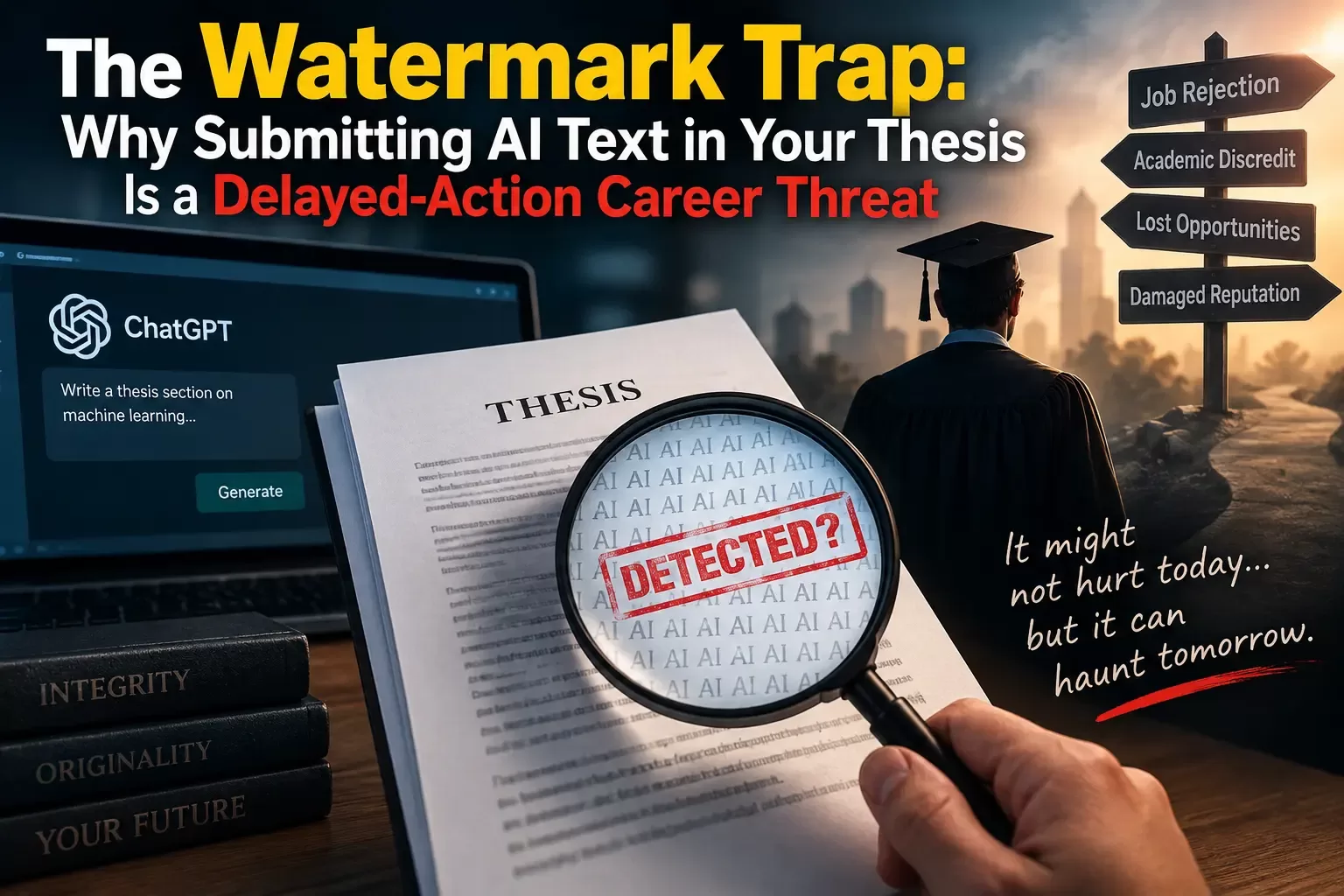
The technological landscape shifted when major AI labs moved from external detection to source-level watermarking. Frontier systems, including Google DeepMind with its SynthID framework and commercial inference providers complying with Article 50 of the EU AI Act, are now embedding invisible statistical watermarks directly into the text generation process. If you paste AI-written paragraphs into your research papers, you are not just gambling on whether your supervisor notices this semester. You are leaving an indelible mathematical signature in a document that will be preserved for the rest of your professional life.
How Invisible Text Watermarking Actually Works
Many students picture a watermark as hidden metadata, invisible Unicode characters, or zero-width spaces embedded between words. They assume that copying text into Notepad, changing fonts, or retyping sentences cleans the slate. That assumption is completely wrong.
Modern text watermarking works at the token selection stage. When a large language model generates an answer, it calculates a probability distribution across its vocabulary for the next word. A watermarking algorithm like SynthID divides that vocabulary into pseudorandom categories based on the preceding words, then nudges the model to select tokens from specific lists.
To a human reader, the prose looks completely normal. The grammar is natural, the vocabulary fits the context, and no unusual characters exist in the file. However, an algorithm holding the verification key can calculate the probability of those exact word combinations appearing together naturally. Across a short paragraph of 50 words, that statistical signal might be inconclusive. Across a 30-page literature review or a 100-page dissertation, the probability that a human writer accidentally matched that token distribution drops to near zero.
Why Paraphrasers and "Humanizers" Fail
A cottage industry of commercial "humanizer" tools promises to strip AI fingerprints from student papers. In reality, these services simply run your text through a secondary, smaller language model that swaps synonyms and breaks up compound sentences.
While this technique fools primitive perplexity checkers, it struggles against statistical token sampling. To erase a generation-layer watermark from a 10,000-word academic manuscript, a paraphraser would need to scramble the semantic logic so aggressively that the technical integrity of your argument would collapse. Synonyms do not eliminate the underlying probability curve of multi-token sequences. More importantly, using a secondary tool introduces awkward phrasing and technical inaccuracies that draw immediate scrutiny during an oral defense.
The Real Danger: The Permanent Archive Problem
The gravest danger of using generative text in advanced academic research is not the grade you get next month. It is the permanent nature of academic publishing.
Weekly homework assignments and short term papers disappear into departmental archives and are shredded after a few terms. Theses and dissertations do not disappear. They are bound, cataloged, and uploaded to open institutional repositories such as Shodhganga, ProQuest, and university digital libraries. They are permanently public documents tied directly to your legal name.
Consider the timeline:
- Year 1: You use a commercial AI to draft sections of your methodology and literature review. Your university's current plagiarism software does not have access to proprietary watermarking verification keys. Your thesis is approved, and you graduate.
- Year 5: You apply for a tenure-track faculty position, a senior research role in industry, or a government grant. Meanwhile, watermarking detection tools have been standardized and integrated into institutional screening engines like Turnitin.
- Year 7: An automated audit scans the university repository, or a competitor flags your published dissertation for review. The verification key proves that whole chapters of your work matched proprietary generative distributions.
Universities do not operate under statutes of limitations for academic misconduct. Degrees are revoked five, ten, or twenty years after graduation when fraud is substantiated. When a degree is stripped retroactively, every credential, publication, and job offer built on top of that degree crumbles with it.
The Keystroke Trail: What Academic Boards Actually Look At
When an academic integrity committee investigates suspected AI usage today, they rarely rely on a single software percentage. They ask for your version history.
If you wrote your thesis authentically, your Google Docs revision history, Microsoft Word track changes, Overleaf logs, or Git commits reflect human behavior: typing word by word, pausing, deleting sentences, moving paragraphs around, fixing typos, and taking days to complete a chapter.
When a student pastes an AI-generated draft, the document history shows thousands of words appearing in a single timestamp. If an integrity board asks you to produce your preliminary drafts, your research notes, or your incremental edit logs, a lack of documentation is treated as corroborating evidence of misconduct.
The Safe Harbor: How You Can Responsibly Use AI
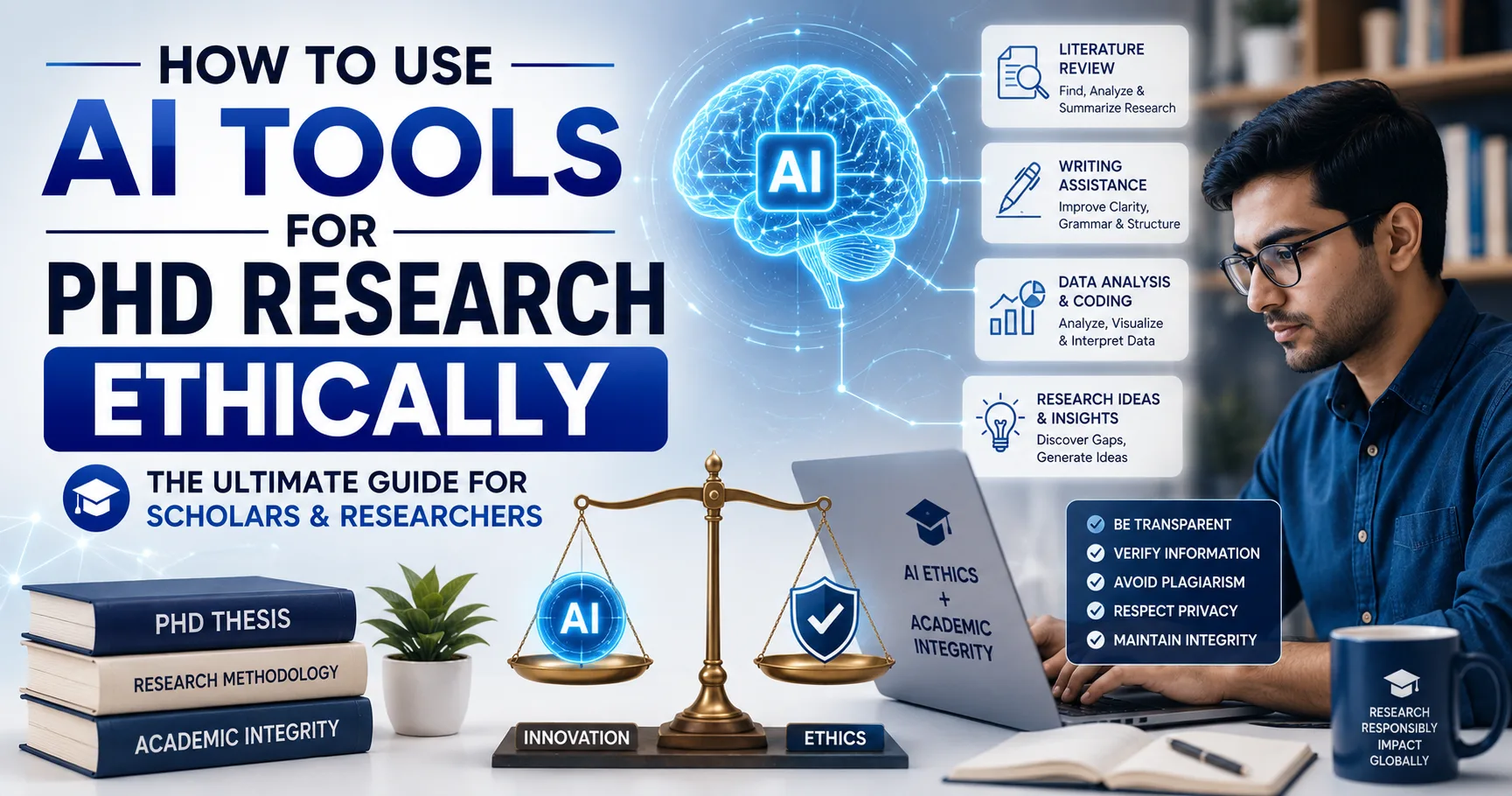
This reality does not mean you must avoid artificial intelligence entirely. Research institutions encourage computational literacy when used legitimately. The line between ethical assistance and career-ending misconduct comes down to ownership of the prose:
- Use AI for structural brainstorming, never drafting: Ask the model to critique the logical flow of your outline, suggest alternative methodological frameworks, or find gaps in your bibliography.
- Debug code, do not write analysis: Use tools to troubleshoot your statistical scripts in R or Python, but write every sentence of your results interpretation yourself.
- Maintain your digital paper trail: Always write inside cloud-backed software with continuous version tracking enabled. Save your early scratchpads, annotated PDFs, and handwritten notes. If your originality is ever questioned, that timeline is your legal defense.
- Never let an LLM write your final manuscript: If you did not put the words together yourself, those sentences do not belong in a document bearing your name.
Earning a postgraduate degree is difficult by design. The pressure to finish is intense, but the shortcut offered by modern language models is a trap with an indefinite shelf life. Write your own thesis. The temporary fatigue of finishing it yourself is nothing compared to the permanent peace of mind that your work is genuinely your own.