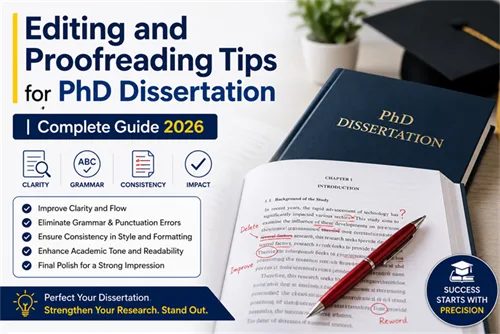
Editing and Proofreading Tips for PhD Dissertation | Complete Guide 2026
Writing a PhD dissertation is difficult. Editing it properly is even harder.
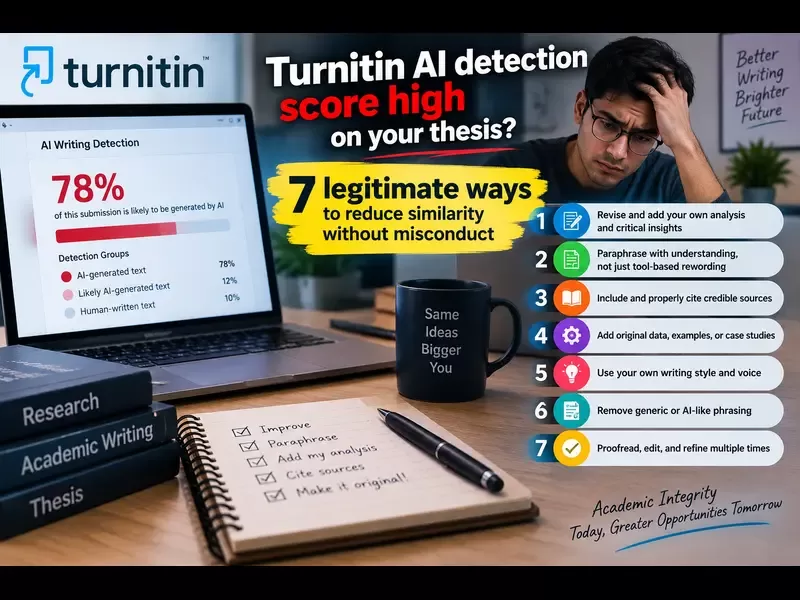
Most PhD candidates underestimate the final stage of dissertation preparation. They assume finishing the research means the work is done. It is not. Weak editing destroys clarity, damages credibility, and makes even strong research look average.
Professors notice poor structure, inconsistent formatting, repetitive writing, weak transitions, citation mistakes, and grammar issues immediately. These problems reduce the impact of your research and can affect evaluation quality.
This complete 2026 guide explains how to edit and proofread your PhD dissertation professionally before submission.
Why Dissertation Editing Matters
A dissertation is not judged only on research quality. It is judged on communication quality.
Strong editing helps you:
-
Improve clarity and logical flow
-
Eliminate grammar and punctuation errors
-
Strengthen academic tone
-
Remove redundancy and filler language
-
Improve readability
-
Maintain formatting consistency
-
Reduce supervisor corrections
-
Increase publication readiness
Poor editing signals lack of discipline and weak academic presentation.
Your research may be excellent, but if the writing is confusing, your argument loses authority.
Editing vs Proofreading: Understand the Difference
Most students confuse editing with proofreading.
Editing
Editing improves the structure and quality of writing itself.
This includes:
-
Sentence clarity
-
Paragraph organization
-
Logical flow
-
Argument strength
-
Academic tone
-
Repetition removal
-
Citation consistency
Proofreading
Proofreading is the final error-checking stage.
This includes:
-
Grammar mistakes
-
Typographical errors
-
Punctuation issues
-
Formatting inconsistencies
-
Spelling corrections
-
Reference list verification
Editing happens before proofreading.
Trying to proofread a badly structured dissertation is a waste of time.
Step-by-Step Dissertation Editing Process
1. Stop Editing Immediately After Writing
Most PhD candidates edit too soon.
Your brain becomes blind to errors because you still remember what you intended to say.
Wait at least 2–3 days before editing a chapter. Distance improves objectivity.
2. Edit Structure Before Grammar
This is where many students fail.
They obsess over commas while ignoring weak arguments and chaotic structure.
First check:
-
Does each chapter have a clear purpose?
-
Do sections flow logically?
-
Are arguments supported with evidence?
-
Are transitions smooth?
-
Is there unnecessary repetition?
Fix structure first. Grammar comes later.
3. Remove Weak Academic Language
Academic writing should be precise, not inflated.
Avoid:
-
“In today’s modern world”
-
“It is important to note that”
-
“Due to the fact that”
-
“Needless to say”
-
“Basically”
-
“Very”
Replace vague wording with direct statements.
Weak:
“The results were very significant in many different ways.”
Strong:
“The results showed statistically significant improvement in energy efficiency.”
Precision creates authority.
Common Dissertation Editing Mistakes
Overwriting
Many PhD students try to sound intelligent by writing complex sentences.
That usually produces unreadable paragraphs.
If a sentence exceeds 30 words, inspect it carefully.
Complex ideas require clarity, not verbal decoration.
Repetition
Repeated arguments weaken authority.
Look for:
-
Repeated definitions
-
Duplicate explanations
-
Similar conclusions across chapters
-
Overused transition phrases
Cut aggressively.
Inconsistent Terminology
One term should have one meaning throughout the dissertation.
Example:
Do not alternate between:
-
“Neural model”
-
“AI architecture”
-
“Machine learning framework”
unless they genuinely mean different things.
Inconsistency creates confusion.
Citation Errors
Citation inconsistencies destroy academic credibility.
Check:
-
Missing references
-
Incorrect author names
-
Citation style mismatches
-
Incomplete bibliography entries
-
Broken DOI links
Reference errors are one of the easiest ways to appear careless.
Best Proofreading Techniques for PhD Dissertations
Read the Dissertation Out Loud
This instantly exposes:
-
awkward phrasing
-
missing words
-
poor sentence rhythm
-
confusing logic
Silent reading hides errors because your brain autocorrects.
Print the Dissertation
Digital reading reduces error detection.
Printed pages improve focus and reveal:
-
spacing problems
-
formatting inconsistencies
-
heading issues
-
visual imbalance
Professional editors still print documents for this reason.
Proofread Backwards
Read sentence-by-sentence from the end toward the beginning.
This breaks narrative flow and forces your brain to focus on errors instead of meaning.
It works surprisingly well.
Check One Error Type at a Time
Do not try to catch everything simultaneously.
Separate proofreading rounds:
-
Grammar
-
Punctuation
-
Citations
-
Formatting
-
Figures and tables
-
Spelling
-
References
Focused review is more effective.
Dissertation Formatting Checklist
Before submission, verify:
-
Font consistency
-
Heading hierarchy
-
Margin settings
-
Page numbering
-
Table formatting
-
Figure labeling
-
Citation style
-
Table of contents accuracy
-
Appendix structure
-
Reference formatting
Formatting mistakes make the dissertation look unfinished.
Best AI Tools for Dissertation Editing in 2026
AI tools help, but blind dependence is dangerous.
Use AI for assistance, not intellectual replacement.
Useful Tools
Grammarly
Best for:
-
grammar correction
-
punctuation
-
clarity suggestions
QuillBot
Useful for:
-
sentence restructuring
-
paraphrasing awkward text
Hemingway Editor
Useful for:
-
readability improvement
-
simplifying dense sentences
ChatGPT
Helpful for:
-
clarity improvement
-
restructuring explanations
-
identifying repetitive writing
-
improving transitions
But AI often weakens academic originality if used carelessly.
Never submit AI-generated arguments without verification.
How Long Should Dissertation Editing Take?
Most students massively underestimate this.
Realistically:
-
Minor dissertation editing: 2–3 weeks
-
Full dissertation editing: 1–2 months
Rushed proofreading produces predictable errors.
Your final review stage deserves serious time allocation.
Professional Dissertation Editing Services: Are They Worth It?
Sometimes yes.
Especially if:
-
English is not your first language
-
Your supervisor gives repeated writing criticism
-
Submission deadline is close
-
Your dissertation exceeds 200 pages
But many editing services are mediocre.
A weak editor can damage academic tone and distort technical meaning.
Choose editors with:
-
academic specialization
-
subject knowledge
-
proofreading credentials
-
thesis editing experience
Cheap editing usually creates expensive problems later.
Final Dissertation Submission Checklist
Before submission:
-
All chapters finalized
-
Citations verified
-
Grammar reviewed
-
Figures labeled correctly
-
Table of contents updated
-
Formatting standardized
-
References cross-checked
-
PDF exported correctly
-
Supervisor comments addressed
-
Final proofread completed
Do not trust a “final version” without a final inspection.
That assumption causes last-minute disasters.
Conclusion
Most PhD dissertations are weakened not by poor research, but by weak presentation.
Editing is not cosmetic. It is intellectual refinement.
A properly edited dissertation:
-
communicates ideas clearly,
-
strengthens authority,
-
improves readability,
-
and increases academic impact.
The students who treat editing seriously submit stronger dissertations than equally intelligent students who rush the final stage.
Your dissertation is not finished when the writing ends.
It is finished when the reading experience becomes effortless.
FAQs
How many times should I proofread my PhD dissertation?
At least 3–5 focused proofreading rounds are recommended before final submission.
Should I hire a professional dissertation editor?
Yes, if you struggle with academic writing clarity, grammar, or formatting consistency.
Can AI tools fully edit a dissertation?
No. AI tools help with grammar and clarity, but they cannot reliably evaluate academic logic or research accuracy.
What is the biggest dissertation editing mistake?
Editing grammar before fixing structure and argument flow.
How long before submission should editing begin?
Ideally 1–2 months before your final deadline.